Nitrous oxide is a dissociative drug that’s used medically to relieve pain. It comes as a colourless gas in small canisters or large tanks.
Key things to know
If used in large amounts over a long-term, or if used while you’re low on B12, nitrous oxide can lead to severe nerve damage.
▼ Long-term effectsNitrous oxide can make you feel uncoordinated. Sit down while using it to avoid accidents.
▼ What to expectUsing from large tanks makes it hard to track how much you've used, which can lead to more harm. It's easier to stick to limits with small cannisters
▼ Safer usingWhat to expect
How does nitrous oxide make you feel?
Nitrous oxide, also known as NOS or nangs, can make you feel relaxed, euphoric, and giggly. It can also cause hallucinations and make you feel dizzy or uncoordinated. Nitrous oxide is short-lasting, usually from 30 seconds to 5 minutes, and wears off quickly. Most effects, both pleasant and unpleasant, are very short lived.
|
Pleasant effects |
Unpleasant effects |
|
Euphoria Giggly / excited Relaxed Numbness Floating / dreamlike dissociation Hallucinations (visual or auditory) Light-headedness |
Dizziness / light-headedness / fainting Weakness / lack of coordination Blurry vision Confusion Headaches Sweating *Distressing hallucinations / paranoia *Loss of consciousness / hypoxia |
*These are usually only experienced at very high doses.
Dosage
How much nitrous oxide do people usually take?
There are no publicly available tests to measure how strong your drugs are, so often people start low and go slow.
This information is not a recommended dosage amount. It can't take account of your specific circumstances. Drugs affect everybody differently, depending on things like your body size, any other drugs you’ve taken, what you have eaten, where you are, and how you're feeling. Find out more under the safer using section.
Remember, drug checking can tell you what is in your drugs, but can’t tell you how strong they are.
The information below is from other websites about how much people commonly use overseas. It is not a recommendation and typical usage in Aotearoa may be different.
We review and update these dosage guidelines every six months to keep them accurate and up to date.
Nitrous oxide: Inhaled |
|
| How much nitrous oxide do people usually take - inhaled (from psychonautwiki.org) | |
| Light | 0.5 - 1 small canister |
| Common | 1 - 2 small canisters |
| Strong | 2 - 5 small canisters |
| Heavy | more than 5 small canisters |
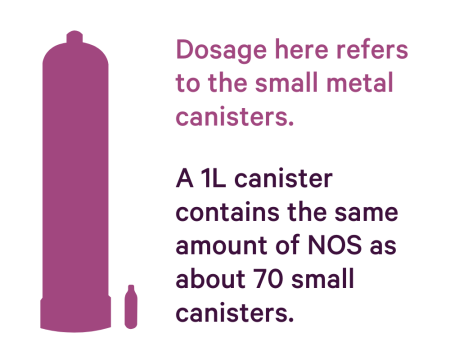
There have been reports of harm from people consuming too much NOS, including hospitalisations and nerve damage. The large canisters can make it easier to take too much. If you're using one of the large canisters, we recommend you discharge the NOS into a balloon and stick to about 1-2 balloons per session.
How to stay safer
How can you be safer when using nitrous oxide?
How you use nitrous oxide is one of the most important things to consider when it comes to staying safer.
Discharge the gas into a balloon. Discharging the gas straight from the canister can cause freeze burns (as they are very cold!). The pressure inside the canister can also cause ruptures to lung tissue. Discharging the gas into a balloon can help avoid burns and allow the pressure to normalize before you inhale it. You can also use a whipped cream dispenser with a nozzle.
Don’t use open flames (including cigarettes). Nitrous oxide itself is not flammable, but it increases the combustion of other substances, so it is wise to not use it around open flames, candles, cigarettes, or other flammable materials.
Sit down when you use. An easy risk to manage with nitrous oxide is to sit somewhere comfortable before you use. Standing up while, or directly after using can result in falling over and hurting yourself (or someone around you!).
Avoid mixing with other substances. Like with many substances, combining nitrous oxide with other drugs or medicines can increase your risk of having an unpleasant experience. Combining nitrous oxide with other central nervous system depressants such as GHB/GBL, alcohol or opioids can lead to unconsciousness in high doses.
Watch your B12 and take it easy. Using lots of nitrous oxide on a regular basis can result in vitamin B12 deficiency, which can cause nerve damage and can be dangerous. It's a good idea to get your B12 levels checked before using nitrous oxide. Take breaks in between sessions and consider limiting the number of canisters you use. If you experience side effects of low B12 such as numbness or difficulty moving fingers, lips, or other parts of the body, tiredness or poor memory, take a break from using nitrous oxide and consult your doctor.
Take care around children. Store drugs safely and be aware that drugs can remain in breastmilk. Follow safe sleep guidelines and be aware that you may not wake up as easily as usual after taking drugs. For more information and advice, see Pregnancy and Substance Use: A Harm Reduction Toolkit from National Harm Reduction Coalition.
Remember to be a tidy kiwi and dispose of your nitrous oxide canisters appropriately! (i.e. don’t throw them on the street).
If you’ve had too much
What happens if you have too much nitrous oxide?
It is very rare to overdose on nitrous oxide. In rare cases taking lots of nitrous oxide can cause you to become unconscious or suffocate from a lack of oxygen.
In most cases, if you’ve used too much nitrous oxide you might feel dizzy, lightheaded, tired, confused or a little out of breath.
Try:
- Focus on breathing – try taking slow, deep breaths.
- If you are able, call and talk to somebody you trust and ask them to help keep you calm.
- Do not take more nitrous oxide, caffeine, alcohol, or other drugs, as these can make you feel worse.
- Move to somewhere quiet – try to sit or lie down and do something relaxing.
- Drink water to stay hydrated.
If you start having more severe symptoms such as difficulty breathing, falling unconscious, severe coughing, or choking or blue lips and/or fingertips you or someone around you should Call 111 immediately as these can be signs of suffocation.
Comedowns
What do comedowns from nitrous oxide feel like, and how can you feel better?
Very few people report comedowns from nitrous oxide. However, if you use nitrous oxide very often you might experience some mild effects.
If you...
-
Feel dizzy
-
Feel tired
-
Feel like you have cravings to use more nitrous oxide
You can try...
-
Get plenty of rest and sleep
-
Remember to eat and drink plenty of water
-
Get moving to release feel-good brain chemicals
-
Reach out and talk with friends and whānau for support
-
Relax and do things that you enjoy to take your mind off not feeling well
-
Avoid caffeine, alcohol, and other drugs
-
Practise mindfulness and deep breathing, and try writing down your thoughts and feelings
Long-term effects
What are the long-term effects of using nitrous oxide?
Long-term effects from nitrous oxide are relatively rare, however if you are using large amounts regularly, you may experience some unpleasant side effects. Nitrous oxide does not have a high addiction potential, but some people may have cravings to use more, especially after a period of using heavily.
In rare cases, long term nitrous oxide use can cause Vitamin B12 deficiency. Low Vitamin B12 can make you feel tired, breathless, confused, and depressed (and many other symptoms). This can be fixed with Vitamin B12 treatment. Vitamin B12 deficiency can cause nerve damage, and there have been cases of this reported linked to heavy nitrous oxide use.
Other long-term effects of nitrous oxide can include memory problems, limb weakness and depression; but research suggests that these effects may also be a result of low vitamin B12. If you have pre-existing heart problems, there is some evidence that heavy use of nitrous oxide can increase the risk of having heart complications.
Some research shows that heavy nitrous oxide use can include reproductive risks and risk to pregnancy, so it is generally recommended that pregnant woman avoid using nangs, especially in large quantities.
Noticing physical symptoms early can help prevent health problems from developing. Check out our physical health section for things to watch out for.
Cutting down
How do you manage withdrawal from nitrous oxide?
See the 'Making changes' page for more information on how to Manage withdrawal from drugs and alcohol.
Nitrous oxide is not known to cause dependence or withdrawal symptoms in most people. However, some people may find themselves having cravings to use more nangs after stopping.
If you are feeling a little unwell after you stop using, try:
- Lean on a support network of friends, family, and professionals
- Stick to a routine: waking up, eating well, keeping active and rewarding yourself with things that bring you joy
- Practice mindfulness by writing down your feelings, doing breathing exercises or meditating
Working and driving
How can nitrous oxide affect your daily activities?
Using nitrous oxide while driving is very dangerous.
Some people may feel hazy or feel the ‘aftereffects’ of nitrous oxide for a short period after using, so it is always a good idea to wait at least an hour while before driving, operating machinery, or working.
The Law
Is Nitrous Oxide Illegal?
The legality of nitrous oxide in New Zealand depends on its intended purpose. It is legal to sell Nitrous oxide for food preparation purposes (i.e., cream canisters). However, as Nitrous oxide is also a medicine under the Medicines Act, so possessing, selling, supplying, or importing it as a medicine is illegal. If you are found to break the law in this case, you may be liable for a large fine, or time in prison. Nitrous oxide is not covered by the Misuse of Drugs Act.
To find out more about the law around legal and controlled drugs, including nitrous oxide, see Drugs and the law.