This article was published in 2025. Data may be out of date.
Sadly, in 2025 we lost more people to accidental overdoses than we did to drowning. Both causes of death are tragic, and both are preventable.
There is a lot we can take away from the report on how to stay safer. Here are 5 of the most important things to know about preventing overdoses:
1. Opioids are still most likely drug to cause an overdose
Opioids (like heroin, morphine or fentanyl) are depressant drugs that slow down your brain and body functions. Taking a higher dose of opioids, especially more potent opioids like heroin or nitazenes, can cause your breathing to slow and even stop. This can happen really quickly.
If you or someone around you is using opioids, it is important to have naloxone on hand. Naloxone is a medicine that temporarily reverses the effects of opioid overdose.
You can get naloxone from your doctor, opioid substitution treatment provider, needle exchange sites or the needle exchange online shop. Naloxone is free but you may need to pay for postage if you buy it online. We've got info on how to use injectable naloxone.
It’s not uncommon for opioids to be something different from what they’re sold as – such as these fake oxycodones that contained nitazenes. It’s a good idea get your substances checked at drug checking to learn what opioid you have. You can also order our free fentanyl and nitazene test strips to screen for these potent opioids in your drugs.
2. Mixing drugs (including alcohol and medicines) majorly increases your risk of an overdose
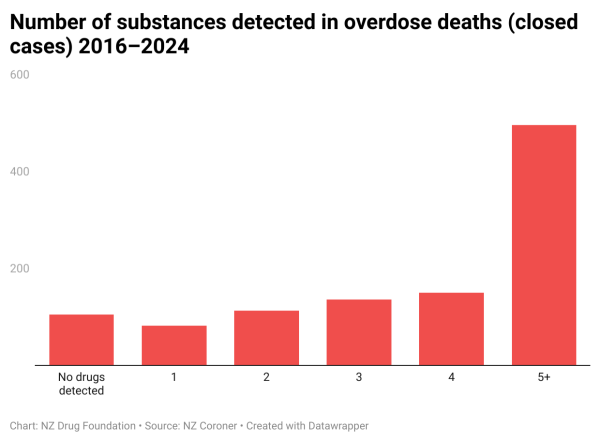
Around half of overdose cases between 2016 and 2024 involved 4 or more substances. Combining substances can be dangerous and can make the effects of drugs more unpleasant and unpredictable.
As a rule of thumb, it’s best to avoid mixing. However, some combinations are riskier than others - such as combining two or more depressant drugs (e.g. opioids and alcohol) and combining drugs and medicines that work on the serotonin system (such as SSRI antidepressants and MDMA).
If you plan on doing any mixing it is important to do your research. Resources such as the TripSit interaction checker can help. It is also a good idea to take a smaller dose of each substance to reduce the risk.
3. Novel and dangerous drugs are showing up in overdose deaths
For the first time ever, we have seen nitazenes (potent synthetic opioids) appear in our overdose cases. We’ve also seen other novel drugs such as bromazolam and other novel benzodiazepines, and fluorexetamine in cases. We also continue to see synthetic cathinones in overdose deaths.
Novel substances like these are designed to mimic the effect of other, more common drugs, but they can be much more potent. These new drugs are unpredictable and often increase your risk of overdose. To find out what is really in your drugs, visit a drug checking clinic.
If you can’t make it to a drug checking clinic, we offer free fentanyl and nitazene test strip packs, so you can quickly and easily test for these substances at home.
4. Stimulant harm is on the rise
Stimulants are drugs that can speed up your brain and body functions, like cocaine or methamphetamine. If you take too much, this can be dangerous. We refer to this as ‘overamping’.
We know there’s been a lot more stimulant drug use in New Zealand recently. In 2024, we saw an increase in harm and overdoses from these drugs.
You can reduce your risk of overamping by using less, taking the drug in a lower risk way, such as swallowing or mixing in a drink instead of snorting or injecting, and by avoiding mixing stimulants (including caffeine).
The symptoms of overamping can be harder to spot than other overdoses. If someone is becoming agitated, sweating, experiencing chest pains or a rapid heartrate, has a fever or is having seizures, they need medical attention. Overamping can be fatal if they don’t get help. Check our our Overamping page for more info.
5. People who go to hospital for an overdose almost always survive
In the last ten years, over 99% of people who went to hospital for an overdose survived.
This is why it is so important to learn the signs of an overdose and get help quickly! Overdoses are preventable and if people get the help they need quickly, most will survive.
If you’re taking drugs, using them around other people who know the signs of an overdose greatly reduces your risk of dying. It’s also a great idea to carry naloxone (as above) to reverse opioid overdoses and buy more time for help to arrive.
Remember, if you call an ambulance for someone overdosing, you won’t be in trouble. Ambulance and medical staff need to know what that person has taken in order to be able to help them, so it’s best to be honest.
We lose almost 3 New Zealanders a week to preventable overdoses. That’s hundreds of families a year that lose loved ones – but there’s so much we can all do to reduce overdose deaths. Knowing how to spot an overdose and what to do could save a life, so brush up on your skills on our Overdoses page.
You can read the full report on the New Zealand Drug Foundation website.
Related stories
Stay up to date with The Level
Sign up to our newsletter
Recent stories
Running for recovery: meet the Speed Freaks
Meet the Speed Freaks, a nationwide running for recovery group.
Online alcohol & drug support for people with ADHD
Join our supportive online space for people with ADHD to talk about change and recovery. You don’t need to be formally diagnosed to join.